コンテンツにスキップ


Most motorcycles should have their oil changed every 3,000–7,000 miles (about 5,000–11,000 kilometres), or according to the manufacturer’s maintenance schedule. This depends on factors such as engine type, oil quality, riding conditions, and how frequently the motorcycle is used. According to guidance from the Motorcycle Safety Foundation (MSF) and lubricant performance standards developed by SAE International and the American Petroleum Institute (API), regularly replacing the oil in your motorcycle is essential for reducing engine wear, maintaining lubrication performance and extending the engine’s service life.
Unlike automotive engines, motorcycle engines often combine the engine, gearbox, and clutch systems into one compact unit. This means that motorcycle oil must withstand higher levels of mechanical stress, temperature fluctuations, and shear forces. Therefore, choosing the correct oil and replacing it at the right interval is critical for maintaining engine reliability and optimal riding performance.
Introduction: Why Motorcycle Oil Change Frequency Matters
Engine oil is one of the most important maintenance components for any motorcycle. Although motorcycles are smaller than passenger vehicles, their engines often operate in demanding conditions, such as high RPM, frequent acceleration, carrying heavy loads, and operating in high temperatures.
The main purpose of engine oil is to lubricate moving engine components, but it also serves the following functions:
- Reduce friction between metal surfaces;
- Remove heat from internal components;
- Prevent corrosion and oxidation;
- Clean contaminants inside the engine;
- Maintain clutch and transmission performance.
Over time, oil gradually loses its protective properties due to:
- Thermal breakdown
- Contamination from combustion gases
- Moisture accumulation
- Additive depletion
- Mechanical shear stress
When old oil remains in an engine for too long, it can lead to:
- Increased engine wear
- Poor shifting performance
- Higher operating temperatures
- Reduced fuel efficiency
- Shortened engine lifespan
Therefore, understanding how often to change motorcycle oil helps riders maintain performance and avoid expensive repairs.
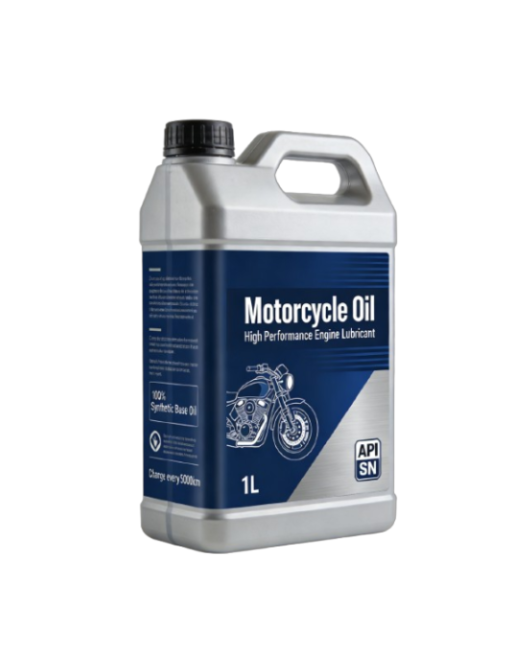
How Often Should You Change Motorcycle Oil?
There is no single replacement interval suitable for every motorcycle because oil life depends on several factors.
In general:
| Motorcycle Usage Condition | 推奨交換間隔 |
| Normal street riding | Every 3,000–5,000 miles (5,000–8,000 km) |
| High-performance motorcycles | Every 2,000–4,000 miles (3,000–6,500 km) |
| Synthetic motorcycle oil users | Every 5,000–7,000+ miles (8,000–11,000+ km) |
| Frequent short-distance riding | More frequently than standard intervals |
| Racing or extreme riding | After intensive use or according to manufacturer guidance |
The motorcycle manufacturer’s service manual should always be considered the primary reference because different engines have different lubrication requirements.
For example:
- A small commuter motorcycle may tolerate longer intervals.
- A high-revving sport bike may require more frequent oil changes.
- An off-road motorcycle operating in dust and mud may need shorter service periods.
Why Does Motorcycle Oil Require Special Attention?
Many motorcycle engines differ significantly from automobile engines.
A typical motorcycle engine may share oil between:
- Engine components
- Transmission gears
- Wet clutch system
This creates additional requirements for motorcycle oil.
-
Higher Mechanical Stress
Motorcycle engines often operate at higher RPM compared with many car engines.
Higher RPM creates:
- Increased friction
- Greater temperature exposure
- Stronger oil shear forces
A suitable motorcycle oil must maintain viscosity and protective performance under these conditions.
-
Wet Clutch Compatibility
Many motorcycles use wet clutch systems in which the clutch plates operate in engine oil.
Automotive oils may contain friction-reducing additives that can cause:
- Clutch slipping
- Reduced power transfer
- Poor acceleration response
Therefore, motorcycle-specific oils are formulated differently to maintain proper clutch engagement.
-
Transmission Protection
In many motorcycles, the same oil lubricates transmission gears.
Gear contact creates strong pressure forces that can break down unsuitable lubricants.
Quality motorcycle oil must provide:
- Wear protection
- Stable viscosity
- Oxidation resistance
Factors That Affect Motorcycle Oil Change Frequency
The recommended oil replacement interval can change depending on how and where the motorcycle is used.
-
Riding Style
Aggressive riding increases oil stress.
Examples include:
- Frequent high-speed riding
- Rapid acceleration
- High RPM operation
- Track riding
These conditions generate more heat and mechanical stress, requiring more frequent oil changes.
-
Climate and Temperature
Environmental conditions also influence oil performance.
Hot climates may accelerate:
- Oxidation
- Oil breakdown
- Additive depletion
Cold climates may increase:
- Engine warm-up time
- Moisture accumulation
Riders in extreme environments should monitor oil condition more frequently.
-
Riding Frequency
A motorcycle used every day experiences different oil conditions compared with one stored for months.
Short trips can be particularly harmful because:
- The engine may not reach full operating temperature
- Moisture may remain inside the oil
- Contaminants may accumulate
For motorcycles mainly used for short-distance riding, shorter oil change intervals are recommended.
Choosing the Right Motorcycle Oil
Selecting the correct oil is just as important as changing it regularly.
- Key specifications include:
- Viscosity grade
- API classification
- JASO motorcycle oil standard
- Synthetic or mineral formulation
-
鉱物油
Mineral oil is refined from crude petroleum.
Advantages:
- Lower cost
- Suitable for older engines
- Good for basic applications
Disadvantages:
- Lower temperature resistance
- Shorter replacement intervals
-
半合成油
Semi-synthetic oil combines mineral and synthetic base oils.
Advantages:
- Balanced performance
- Moderate cost
- Better protection than conventional oil
It is commonly used for:
- Daily commuting motorcycles
- Mid-range engines
-
Fully Synthetic Oil
Synthetic motorcycle oil is engineered for higher performance.
Advantages:
- Better thermal stability
- Longer service life
- Improved protection under extreme conditions
It is often recommended for:
- Sport motorcycles
- High-performance engines
- Heavy-use applications
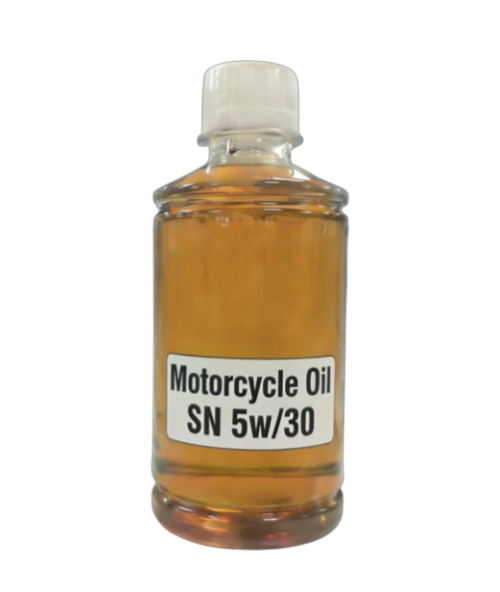
Motorcycle Oil Specifications Explained
| Specification | Meaning | Importance |
| SAE粘度グレード | Oil thickness at different temperatures | Determines lubrication performance |
| API Rating | Engine oil performance classification | Indicates quality level |
| JASO MA/MA2 | Motorcycle clutch compatibility standard | Prevents clutch slipping |
| Synthetic Grade | Base oil technology | Influences durability and protection |
Signs That Your Motorcycle Oil Needs Changing
Following a maintenance schedule is the safest way to protect a motorcycle engine, but riders should also understand the warning signs that indicate oil degradation. Motorcycle oil does not suddenly stop working; instead, its performance gradually declines as contaminants accumulate and additives become exhausted.
Recognizing these signs early can help prevent unnecessary engine wear and maintain smooth riding performance.
-
Dark or Dirty Oil Appearance
Fresh motorcycle oil usually has a clear color depending on its formulation. After thousands of kilometers of operation, oil naturally becomes darker because it absorbs:
- Combustion by-products
- Metal particles
- Dirt contaminants
- Oxidation compounds
A darker color alone does not always mean the oil is unusable because some modern oils are designed to suspend contaminants effectively. However, extremely dirty, thick, or gritty oil usually indicates that replacement is necessary.
-
Increased Engine Noise
Engine oil creates a protective lubrication layer between moving metal components.
When oil becomes degraded, the protective film may become weaker, causing increased contact between:
- Pistons
- Bearings
- Camshafts
- Gear components
Riders may notice:
- Louder engine operation
- More mechanical sounds
- Rougher running conditions
These symptoms suggest that the oil may no longer provide sufficient protection.
-
Difficult Gear Shifting
For motorcycles using wet clutch systems, oil condition directly affects transmission performance.
Old or unsuitable motorcycle oil may cause:
- Hard shifting
- Gear engagement problems
- Clutch slipping
- Unusual transmission feedback
Because the same lubricant often serves both the engine and gearbox, maintaining proper oil quality is essential.
-
Higher Operating Temperature
Oil helps transfer heat away from internal engine components.
When oil loses its viscosity and cooling capability, the engine may operate hotter than normal.
Possible indicators include:
- Excessive heat from the engine area
- Reduced performance
- Cooling system working harder
Regular oil replacement helps maintain stable engine temperatures.
Step-by-Step Motorcycle Oil Change Guide
Changing motorcycle oil correctly is important because improper maintenance can reduce engine protection.
A typical oil change process includes the following steps:
Step 1: Warm Up the Engine
Run the motorcycle for several minutes before changing oil.
Warm oil flows more easily and helps remove suspended contaminants.
However, avoid operating the engine at extremely high temperatures because hot oil can cause burns during maintenance.
Step 2: Drain the Old Oil
Place the motorcycle on a stable surface and remove the drain plug carefully.
Allow enough time for the old oil to completely drain.
During this step, inspect:
- Drain plug condition
- Metal particles
- Oil contamination level
Small amounts of normal wear particles may occur, but excessive metal debris may indicate internal engine problems.
Step 3: Replace the Oil Filter
The oil filter captures contaminants during operation.
A new oil filter helps ensure that fresh oil remains clean.
Replacing the filter during every oil change is recommended for many motorcycles because a contaminated filter can reduce lubrication efficiency.
Step 4: Add New Motorcycle Oil
Always use oil that meets the motorcycle manufacturer’s requirements.
Check:
- Correct viscosity grade
- Required API specification
- JASO compatibility
- Proper oil capacity
Using incorrect oil may affect:
- Engine protection
- Clutch operation
- Fuel efficiency
Step 5: Check Oil Level
After adding oil:
- Start the engine briefly.
- Turn off the engine.
- Wait for the oil to settle.
- Check the oil level indicator.
Too little oil may cause insufficient lubrication, while too much oil can increase pressure and create operational problems.
Common Motorcycle Oil Change Mistakes
Many engine problems are caused not by poor-quality oil, but by incorrect maintenance practices.
-
Using Automotive Oil Instead of Motorcycle Oil
One common mistake is assuming all engine oils are interchangeable.
Automotive oils may contain friction modifiers that are unsuitable for motorcycles with wet clutches.
Potential problems include:
- Clutch slipping
- Reduced transmission performance
- Poor acceleration
Motorcycle-specific oil should be selected whenever required by the manufacturer.
-
Extending Oil Change Intervals Too Long
Some riders delay oil changes because the motorcycle still appears to operate normally.
However, internal engine wear may occur before obvious symptoms appear.
Old oil can cause:
- Increased friction
- Reduced protection
- Sludge formation
- Accelerated component wear
Regular maintenance is usually less expensive than engine repair.
-
Mixing Different Oil Types Without Checking Compatibility
Mixing different formulations may affect oil performance.
For example:
- Mineral oil
- Synthetic oil
- Different additive packages
- May not always provide the expected performance when combined.
When changing oil brands or formulations, following manufacturer recommendations is the safest approach.
How to Extend Motorcycle Oil Life?
Although motorcycle oil eventually requires replacement, proper riding and maintenance habits can help maximize oil performance.
-
Maintain Correct Engine Temperature
Avoid excessive overheating because high temperatures accelerate oil degradation.
Proper maintenance of:
- Cooling systems
- Engine components
- Riding habits
- helps preserve oil quality
-
Follow Regular Maintenance Intervals
A consistent maintenance schedule prevents oil from reaching the point where protection becomes inadequate.
Many professional lubricant manufacturers, including ANOIL, develop motorcycle and industrial lubricant solutions designed around specific operating conditions, emphasizing the importance of selecting oil according to equipment requirements rather than simply choosing the cheapest option.
-
Store Motorcycles Properly
Long storage periods can affect oil condition.
Before extended storage:
- Check oil condition
- Consider replacing old oil
- Protect the engine from moisture contamination
Proper storage helps maintain engine reliability when the motorcycle returns to service.
How Often Should Different Types of Motorcycles Change Oil?
Different motorcycle categories have different lubrication demands.
| Motorcycle Type | Recommended Oil Change Considerations |
| Commuter Motorcycle | Follow standard manufacturer intervals; daily riding usually requires regular scheduled changes. |
| Sport Motorcycle | More frequent changes may be needed due to high RPM operation |
| Touring Motorcycle | Quality synthetic oil may support longer intervals during highway use |
| Off-Road Motorcycle | Shorter intervals due to dust, mud, and high engine stress |
| Racing Motorcycle | Oil replacement based on usage hours and competition conditions |
The owner’s manual remains the most accurate source because engine design, oil capacity, and operating temperature vary significantly between models.
FAQ: Motorcycle Oil Change
- How often should I change motorcycle oil?
Most motorcycles require an oil change every 3,000–7,000 miles (5,000–11,000 km), but the exact interval depends on the motorcycle model, oil type, riding conditions, and manufacturer recommendations.
- How long does motorcycle oil last?
Motorcycle oil life depends on usage conditions. Synthetic motorcycle oil generally lasts longer than mineral oil, but frequent high-temperature riding or severe conditions can shorten the service interval.
- Can I use car oil in my motorcycle?
In many cases, car oil is not recommended for motorcycles, especially those using wet clutch systems. Motorcycle oil is specifically designed to handle engine, gearbox, and clutch requirements.
- What happens if I do not change motorcycle oil regularly?
Ignoring oil changes can lead to:
- Increased engine wear
- Poor lubrication
- Higher temperatures
- Reduced engine lifespan
- Expensive repairs
- Is synthetic motorcycle oil better than regular oil?
Synthetic motorcycle oil generally provides better performance under high temperatures and heavy loads. It is often preferred for high-performance motorcycles, although the correct choice depends on the motorcycle manufacturer’s specifications.
- How do I know what motorcycle oil to buy?
Check the motorcycle owner’s manual for:
- Recommended viscosity
- API rating
- JASO specification
- Oil capacity
Choosing oil based on manufacturer requirements ensures proper engine protection.
Conclusion: How Often Should You Really Change Motorcycle Oil?
The ideal interval for changing the oil in a motorcycle depends on the design of the motorcycle, the quality of the lubricant, and the riding environment. For most riders, replacing the oil in accordance with the manufacturer’s maintenance schedule — typically every 3,000–7,000 miles — strikes a reliable balance between engine protection and maintenance costs.
However, mileage alone should not determine the timing of oil changes. Those who frequently ride in extreme heat or high RPM conditions, in dusty environments or in stop-start traffic should change their oil more frequently.
High-quality motorcycle oil is critical in protecting internal engine components, ensuring smooth gear changes, and extending the engine’s lifespan. Selecting the correct lubricant, monitoring oil condition, and following a consistent maintenance routine can help riders to achieve better performance, improved reliability, and lower long-term ownership costs.
References:
Motorcycle Safety Foundation (MSF) — Motorcycle Operator Manual
SAE International — Lubricant Performance Standards
American Petroleum Institute (API) — Engine Oil Licensing and Certification System