

While it is technically possible to use gasoline engine oil in a diesel engine in an absolute emergency, it is strongly inadvisable for any sustained or routine operation. This is primarily because diesel engines impose fundamentally different lubrication demands, particularly with regard to soot-handling capacity, total base number (TBN), and anti-wear additive chemistry, which gasoline engine oils are not designed to meet.
According to Lubricant Additives: Chemistry and Applications (Rudnick, CRC Press, 3rd edition, 2017) and the API Engine Oil Licensing and Certification System (American Petroleum Institute, 2023), diesel-rated oils must maintain high TBN values to neutralise the increased acidity produced by diesel combustion by-products and have sufficient dispersancy to handle the significantly higher soot loads of compression-ignition engines. A gasoline-only API SP-rated oil does not provide this level of performance in a diesel engine under load. Mixing these lubricant categories without understanding the differences in their additive packages risks accelerated wear, deposit formation and potential engine failure, particularly in modern, high-pressure common rail (HPCR) diesel engines with tight manufacturing tolerances.
Introduction: A Question That Comes Up More Often Than You’d Think
It happens more often than the automotive industry would like to admit: a diesel truck is stranded in a remote location and needs an oil change, but the only motor oil available carries an API SP or SN rating, which is intended for use in gasoline engines. This presents the driver, mechanic, or fleet manager with a practical question: can this oil be used in a diesel engine, at least temporarily? The answer is not as simple as yes or no — it requires an understanding of the differences between the chemistry of gasoline and diesel engine oils, why these differences exist, and the real-world consequences of using one type of oil in another type of engine under different operating conditions.
This is not a trivial question for the lubricants industry. Diesel engines power a large proportion of the global commercial vehicle fleet, as well as agricultural machinery, marine applications and industrial generators. According to the International Energy Agency (IEA, 2023), diesel-fuelled vehicles account for around 30% of global road transport fuel consumption, and in heavy-duty commercial sectors this figure exceeds 90%. Given their widespread use, improper lubrication practices — including using incorrectly specified motor oil — are a significant source of preventable engine damage and premature component failure. Therefore, understanding the chemistry behind engine oil designations is not just academic, but a practical necessity for anyone responsible for maintaining diesel-powered equipment.
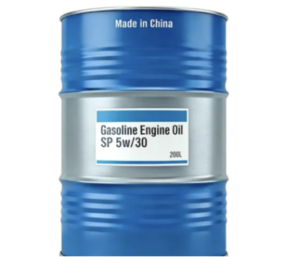
What Separates Gasoline Engine Oil From Diesel-Rated Oil?
The fundamental distinction between gasoline engine oil and diesel engine oil is not viscosity grade — both product families are available across the same SAE viscosity classifications, from 5W-30 to 15W-40 — but rather the additive package composition and the performance test standards the oil is required to pass before receiving its API service designation.
Gasoline engine oils are designated by API “S” (Service) category ratings, the current top tier being API SP (introduced in 2020), which was designed to address issues specific to spark-ignition engines: low-speed pre-ignition (LSPI) in turbocharged direct-injection gasoline engines, timing chain wear, and compatibility with gasoline particulate filter (GPF) systems. These oils are formulated with antioxidant chemistry optimized for the relatively lower soot loads and combustion by-product acidity levels characteristic of gasoline combustion.
Diesel engine oils, by contrast, carry API “C” (Commercial) category ratings. The current top-tier heavy-duty diesel designation is API CK-4 (introduced in 2016), with FA-4 as a companion category for low-viscosity, fuel-efficiency-optimized formulations. These oils are engineered to manage conditions that gasoline engines simply do not generate at comparable severity levels. Diesel combustion produces substantially greater quantities of soot — the American Society of Lubrication Engineers (ASLE) documents diesel engine soot generation rates of 0.5–2.0% of oil mass during normal operation — and the oil must maintain dispersancy to keep these particles suspended rather than allowing them to agglomerate into abrasive masses. Additionally, the sulfur content of diesel fuel (even ultra-low sulfur diesel at 15 ppm maximum in the US) generates sulfuric acid as a combustion by-product, requiring the oil to maintain a Total Base Number (TBN) significantly higher than what gasoline engine oils carry — typically 8–12 mg KOH/g for diesel-rated oils versus 4–8 mg KOH/g for gasoline-only formulations.
The Chemistry: Why Additive Packages Are Not Interchangeable
The additive packages in gasoline engine oils and diesel engine oils are formulated around entirely different performance targets, and this is the technical core of why substitution creates risk. The key additive categories where gasoline and diesel oil formulations diverge most significantly are dispersants, detergents, anti-wear agents, and friction modifiers.
Dispersants in diesel engine oils must handle orders of magnitude more soot than those in gasoline engine oils. Modern diesel dispersant chemistry — typically based on polyisobutylene succinimide (PIBSI) compounds — is specifically engineered with higher treat rates and molecular architectures suited to keeping submicron soot particles suspended in the oil matrix without flocculation. A gasoline engine oil’s dispersant system is formulated for lower-load duty and will typically be overtaxed in a diesel application within tens of hours of operation under load, leading to soot agglomeration and the formation of abrasive particles that accelerate wear on cylinder walls, piston rings, and bearing surfaces.
Detergents — metallic compounds such as calcium sulfonates and magnesium phenates — are responsible for neutralizing acids and keeping engine surfaces clean. Diesel engine oils carry higher concentrations of these compounds to sustain the elevated TBN values needed for acid neutralization over the full drain interval. A gasoline engine oil used in a diesel application will experience TBN depletion far more rapidly than its design intent allows, leaving the oil acidic well before the scheduled oil change — a condition that attacks bearing surfaces and engine seals.
Anti-wear additives, primarily zinc dialkyldithiophosphate (ZDDP) compounds, are calibrated differently between the two categories. API SP gasoline engine oil specifications have actually reduced ZDDP concentrations relative to earlier API ratings, as excess phosphorus from ZDDP is harmful to catalytic converters in gasoline engine exhaust aftertreatment systems. Diesel engines, particularly heavy-duty applications, benefit from higher ZDDP levels for protection of high-load components, and modern API CK-4 oils are formulated accordingly. Running an API SP oil in a diesel therefore potentially means under-dosed anti-wear protection for the engine’s most stressed components.
Comparative Overview: Gasoline Engine Oil vs. Diesel Engine Oil
| API Service Category | SP (S-series, spark-ignition) | CK-4 / FA-4 (C-series, compression-ignition) |
| Total Base Number (TBN) | 4–8 mg KOH/g | 8–14 mg KOH/g |
| Soot Dispersancy Rating | Low to moderate | High (engineered for 0.5–2% soot load) |
| ZDDP (Phosphorus) Level | Reduced (≤800 ppm P) to protect catalysts | Higher (≤1200 ppm P) for wear protection |
| Detergent Load | Moderate | High (elevated metallic detergent concentration) |
| Oxidation Stability | Designed for gasoline combustion environment | Designed for higher-temperature diesel combustion |
| HPCR Fuel System Compatibility | Not validated | Required for API CK-4 certification |
| Shear Stability | ASTM D6278 tested | ASTM D6278 + KRL taper roller test required |
| Ash Content (SAPS) | Low-to-mid SAPS (SP) | Higher SAPS (full SAPS for CK-4) |
| Friction Modifier Content | Higher (fuel economy focus for SI engines) | Calibrated for CI engine tribology |
What Happens If You Use Gasoline Engine Oil in a Diesel Engine?
The consequences of using gasoline engine oil in a diesel engine vary significantly based on the engine type, the duration of use, and the operating conditions. It is important to distinguish between scenarios because the risk profile is not uniform.
In a modern high-pressure common rail (HPCR) diesel engine — which operates at fuel injection pressures of 1,800–2,500 bar and features tight component tolerances — the risks are most acute. These engines are exceptionally sensitive to lubricant degradation. The elevated soot loads generated in diesel combustion, combined with the gasoline oil’s insufficient dispersancy and lower TBN, create conditions for accelerated bearing wear, injector fouling, and piston ring groove deposit formation within a relatively short operating period. Data from Volvo Trucks’ powertrain engineering documentation indicates that oil TBN depletion in a diesel engine running an inadequately rated oil can be 3–4 times faster than the same oil used in its intended gasoline application, effectively shortening the safe drain interval to a fraction of the labeled recommendation.
In older diesel engines with less stringent tolerances and lower injection pressures — such as naturally aspirated indirect injection (IDI) diesels found in agricultural or industrial equipment — the consequences of a short-term gasoline oil substitution are less catastrophic but still measurable. The soot management shortfall will begin to manifest as increased oil darkening and thickening more rapidly than with a properly rated oil, indicating dispersancy overload. TBN depletion will accelerate, particularly if the engine is operating on older diesel fuel with higher sulfur content than modern ULSD specifications.
In a genuine short-term emergency — a single moderate-duration journey to the nearest service point, covering perhaps 50–150 miles — the use of a gasoline engine oil in a diesel will generally not cause catastrophic failure, provided the oil level is correct and the engine is not operated at sustained high load. However, this must be followed immediately by an oil and filter change using the correct diesel-rated specification. Treating this as anything other than a temporary emergency measure would be a serious error in maintenance judgment.
Dual-Rated Oils: The Practical Middle Ground
It is worth noting that a significant proportion of the motor oil market consists of dual-rated oils carrying both API S and API C designations, such as API SP/CF and SN/CF. These products are formulated to meet the minimum performance requirements for both spark-ignition and compression-ignition applications, and they can be used in light-duty diesel engines if the manufacturer’s specifications permit a CF rating or higher. However, these dual-rated oils are generally only considered appropriate for light-duty diesel passenger vehicles operating on low-sulphur fuel, and they are not a substitute for dedicated CK-4 oils in heavy-duty, high-load or high-soot diesel applications. Fleet operators and commercial vehicle owners should always cross-reference the dual rating with the engine manufacturer’s OEM specification prior to use.
How to Read Engine Oil Labels and Specifications Correctly?
Understanding API and ACEA oil specifications is essential for correct lubricant selection and is often where confusion between gasoline and diesel oil categories originates.
| API SP | Current top-tier gasoline (SI) engine rating | Use in petrol/gasoline cars per OEM spec |
| API CK-4 | Current top-tier heavy-duty diesel rating (2017+) | Use in HD diesel trucks and equipment |
| API FA-4 | Low-viscosity diesel rating (fuel economy focus) | Compatible only with specific HPCR diesel engines |
| API CF | Older diesel rating; still used in dual-rated light oils | Light-duty diesel only; not suitable for HD applications |
| ACEA C3 | European gasoline/light diesel combination category | Petrol and light diesel passenger vehicles in EU market |
| ACEA E9 | European heavy-duty diesel with DPF compatibility | HD diesel trucks with particulate filter systems |
| SAE 15W-40 | Viscosity grade (multi-grade) | Standard HD diesel viscosity; not a performance spec |
| SAE 5W-30 | Low-viscosity multi-grade | Common in modern gasoline engines; check diesel OEM spec |
The single most important rule when selecting engine oil: always start with the engine manufacturer’s specification, not the oil label marketing claims. The OEM specification is found in the vehicle or equipment owner’s manual and supersedes all third-party guidance. For diesel engines, look for explicit API C-series, ACEA E-series, or manufacturer-specific approvals (e.g., Volvo VDS-5, Mercedes-Benz MB 228.51, Caterpillar ECF-3).
FAQ: Gasoline Engine Oil — Common Questions Answered
Q1: What happens if I accidentally put gasoline engine oil in a diesel engine?
If it was a small top-up rather than a full oil change, the dilution effect means the risk is proportionally lower — the predominantly diesel-rated oil in the sump will buffer the impact of the mismatched additive package. Drain the oil as soon as possible, refill with the correct diesel specification, and monitor for unusual noise, excessive smoke, or oil pressure anomalies over the subsequent operating hours. For a full oil change, fill with the wrong oil, drain and refill immediately before starting the engine if possible, or limit operation to the minimum necessary to reach a service facility.
Q2: Can I use 5W-30 gasoline engine oil in a diesel engine?
The viscosity grade alone (5W-30) does not determine suitability for a diesel engine — the API service category and additive package content are what matter. Some diesel engines do specify 5W-30 viscosity grade oils, but those must carry the appropriate API C-series or OEM-approved diesel specification. A generic 5W-30 with only an API SP rating is not appropriate for sustained diesel engine use, regardless of viscosity.
Q3: Is there an engine oil that works in both gasoline and diesel engines?
Yes — dual-rated oils carrying both API S and API C designations (e.g., API SP/CF) are formulated to meet the minimum performance thresholds for both engine types and are widely used in light-duty diesel applications where the OEM approves a CF-rated oil. These oils are not, however, appropriate for heavy-duty or high-load diesel applications, which require dedicated CK-4 or equivalent specification oils with the full dispersancy, TBN, and anti-wear additive package that heavy diesel service demands.
Q4: Why do diesel engines need a higher TBN in their oil than gasoline engines?
Diesel combustion produces higher concentrations of acidic combustion by-products — primarily sulfuric acid (from sulfur in diesel fuel) and nitric acid (from NOx reactions) — compared to gasoline combustion. The Total Base Number (TBN) of an engine oil measures its reserve alkalinity available to neutralize these acids and prevent corrosive attack on metal surfaces. Diesel engine oils are formulated with higher metallic detergent concentrations to sustain the elevated TBN values needed throughout a full drain interval, whereas gasoline engine oils carry lower TBN reserves because the acid load they face is substantially lighter.
Q5: What is the correct engine oil specification for a modern diesel truck?
The current recommended specification for heavy-duty diesel trucks operating in North America is API CK-4 (or the older CI-4 Plus for legacy engines). In Europe, the relevant specification is typically ACEA E6, E7, or E9, often with additional OEM approvals from manufacturers such as Volvo (VDS-5), DAF (HP2), Scania (STO:21), or Mercedes-Benz (MB 228.51). Always consult the specific vehicle’s owner manual and the engine manufacturer’s most current approval list, as OEM specifications are periodically updated to reflect new engine technology and emission aftertreatment system requirements.
Q6: Does using the wrong engine oil void a diesel engine warranty?
In most cases, yes — using an oil that does not meet the engine manufacturer’s specified API category or OEM approval can constitute a breach of maintenance requirements and may void the powertrain warranty. Modern diesel engine manufacturers conduct extensive oil approval testing, and the OEM approval list defines which products meet the engineering requirements for that engine family. This is particularly significant for engines equipped with diesel particulate filters (DPF) and selective catalytic reduction (SCR) aftertreatment systems, where incorrect lubricant chemistry can cause accelerated DPF loading, catalytic converter degradation, and costly emissions system failures.
Conclusion: Get the Specification Right — Every Time
In short, the answer to the question ‘Can I use gasoline engine oil in a diesel engine?’ is ‘Not as standard practice and not without understanding the real mechanical and chemical consequences.’ Petrol engine oil is a precision-engineered product designed for the combustion environment, load characteristics and component metallurgy of spark-ignition engines. Diesel engines, whether in light-duty passenger vehicles, medium-duty commercial trucks or heavy-duty industrial equipment, operate in a more demanding lubrication environment. This environment requires oils that are specifically formulated for diesel engines and have the TBN, dispersancy, anti-wear chemistry and oxidation stability demanded by the diesel combustion cycle.
In a genuine emergency, using the best available gasoline engine oil as a short-term substitute is preferable to running an engine severely low on oil. However, this scenario requires an immediate oil change at the earliest opportunity rather than a wait-and-see approach. For those responsible for diesel-powered equipment, including fleet managers, owner-operators, agricultural machinery users and workshop technicians, investing a few minutes in reading the OEM specification and stocking the correct lubricant for each machine in service is one of the most effective preventive maintenance practices available. Engine oil is not something to be chosen out of convenience; it is a precision-engineered chemical system that protects investments worth tens or hundreds of thousands of pounds over decades of productive service.