


Automotive lubricants are engineered fluids or semi-fluids that are applied between moving mechanical surfaces to reduce friction, dissipate heat, prevent corrosion, and extend the service life of components in engines, transmissions, differentials, and chassis systems.
According to the 18th edition (2023) of the American Petroleum Institute (API) Publication 1509 — Engine Oil Licensing and Certification System, the performance classification of automotive lubricants is governed by standardised bench and engine testing protocols that define minimum protection thresholds for each API service category, from the legacy SF/SG designations to the current SP and SN Plus ratings. The Kline & Company Global Automotive Lubricants Market Study (2024) estimates the global automotive lubricant market to be worth USD 68.4 billion, with engine oil accounting for around 57% of the total volume, followed by transmission fluids, gear oils, and speciality greases.
What Is an Automotive Lubricant? Definition and Function
In its broadest technical definition, an automotive lubricant is any substance — whether liquid, semi-solid or solid — that is introduced between two moving surfaces to reduce friction, minimise wear and carry thermal energy away from the contact zone. In the context of the automotive industry, this definition encompasses a wide range of chemically distinct products, including engine crankcase oil, automatic and manual transmission fluid, differential gear oil, power steering fluid, brake fluid, wheel bearing grease and air conditioning compressor lubricant. Each of these products is formulated to perform reliably within the specific temperature range, pressure regime, shear rate, and chemical environment of its intended application.
The functional roles of an automotive lubricant extend well beyond simple friction reduction. A properly formulated engine oil, for example, simultaneously performs six distinct functions: ① friction and wear reduction at cam/follower, piston ring/cylinder, and crankshaft/bearing contact zones; ② thermal management, absorbing heat from combustion-adjacent surfaces and transferring it to the oil sump where it can be dissipated via the pan surface or an oil cooler; ③ corrosion inhibition, using alkaline reserve additive packages (measured as Total Base Number, or TBN) to neutralize acidic combustion byproducts before they chemically attack ferrous and non-ferrous bearing surfaces; ④ contaminant suspension, keeping soot, metal particles, and varnish precursors in stable suspension through dispersant and detergent additive chemistry until they can be removed during an oil drain; ⑤ sealing assistance, maintaining adequate viscosity to partially fill clearances at piston rings and valve stem seals, reducing blowby and oil consumption; and ⑥ hydraulic actuation, transmitting pressure in variable valve timing (VVT) systems, hydraulic tappet circuits, and turbocharger center housing oil supply passages. Understanding this multifunctional role is essential to selecting the correct lubricant specification — any product that excels at one function but fails another represents a net liability in service.
Types of Automotive Lubricants: A Technical Classification
Automotive lubricants are classified along two intersecting axes: application type (what system they serve) and base oil chemistry (what they are made from). Both axes must be considered when specifying a lubricant for a given vehicle and operating condition.
By Application Type:
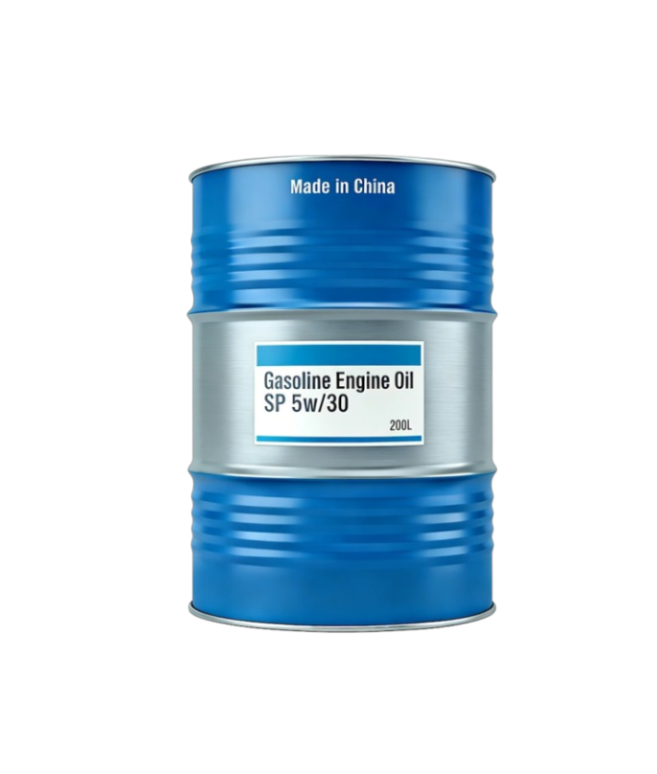
① Engine Oils (Motor Oils) — the largest single product category by volume, designed for internal combustion engines running on gasoline, diesel, or alternative fuels. Engine oils are graded by viscosity using the SAE J300 classification system, which defines both cold-cranking viscosity (the “W” — winter — grade, e.g., 0W, 5W, 10W) and high-temperature high-shear (HTHS) viscosity at 150°C. The most widely specified viscosity grades in current light-duty passenger car applications are 0W-20, 5W-30, and 5W-40; in heavy-duty diesel applications, 15W-40 and 10W-30 remain dominant. Engine oils also carry API service designations (SP, SN Plus for gasoline engines; CK-4, FA-4 for diesel engines) and ACEA sequence ratings (A3/B4, C3, E9) that indicate protection level against a standardized set of engine hardware tests.
② Transmission Fluids — engineered for the thermal and shear demands of automatic transmissions (ATF), continuously variable transmissions (CVT), and dual-clutch transmissions (DCT). ATF formulations must simultaneously lubricate gears and bearings, actuate hydraulic control valves with precise viscometric response, engage wet clutch packs with controlled friction coefficients (neither too high nor too low), and protect against oxidation at fluid temperatures that routinely reach 140–160°C in severe driving cycles. Original equipment manufacturer (OEM) transmission fluid specifications — such as GM DEXRON VI, Ford MERCON ULV, and Toyota WS — are tightly controlled and often not interchangeable, unlike engine oil API categories.
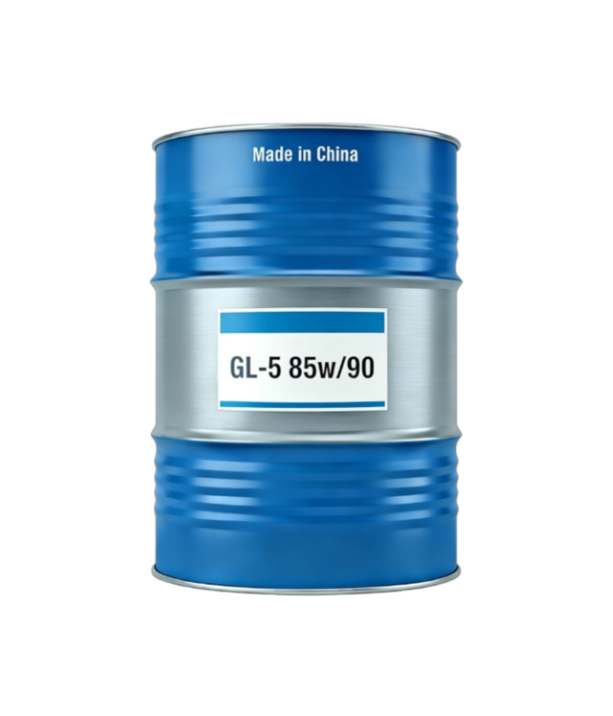
③ Gear Oils — used in manual transmissions, final drive differentials, and transfer cases. Classified per API GL-4 and GL-5 designations (ASTM D6910) and graded under SAE J306 viscosity classification (75W-90, 80W-90, 75W-140 being typical grades). GL-5 extreme-pressure (EP) gear oils contain sulfur-phosphorus additive packages that protect hypoid gear tooth flanks under the high-sliding-load conditions characteristic of rear-axle differentials; however, the same EP additives are corrosive to yellow metals (brass synchro rings) in manual transmissions, making GL-4 or a dedicated MT fluid the correct specification for most manual gearbox applications.
④ Greases — semi-solid lubricants comprising a base oil (mineral or synthetic) thickened with a metallic soap or non-soap thickener (lithium complex, polyurea, calcium sulfonate). Used for wheel bearings, ball joints, CV joint boots, steering linkages, and chassis pivot points where the lubricant must stay in place without requiring a sealed oil system. The National Lubricating Grease Institute (NLGI) consistency scale (000 to 6) describes grease stiffness; NLGI 2 is the most widely used grade for automotive wheel bearing and chassis applications.
⑤ Specialty Fluids — including brake fluids (DOT 3, DOT 4, DOT 5.1 glycol-ether based; DOT 5 silicone based per FMVSS 116 / ISO 4925), power steering fluids, and coolant-adjacent products. Brake fluid is often overlooked as a lubricant but plays a critical sealing and anti-corrosion role in ABS modulator blocks and caliper pistons.
Automotive Lubricant Types — Classification, Key Standards, and Typical Applications
| Gasoline engine oil | SAE J300 (e.g., 5W-30) | API SP / ACEA A3-B4 | Passenger car petrol engines | 8,000–15,000 km (full synthetic) |
| زيت محرك الديزل | SAE J300 (e.g., 15W-40) | API CK-4 / ACEA E9 | Heavy-duty diesel, commercial trucks | 30,000–60,000 km (extended drain) |
| Automatic transmission fluid | SAE J311 | OEM spec (e.g., GM DEXRON VI) | Automatic & CVT transmissions | 60,000–100,000 km |
| Manual transmission/gear oil | SAE J306 (e.g., 75W-90) | API GL-4 / GL-5 | Manual gearbox, differential, axle | 60,000–80,000 km |
| Wheel bearing grease | NLGI Grade 2 | NLGI GC-LB | Wheel hubs, ball joints, chassis | Per service inspection |
| Brake fluid | ISO 4925 / FMVSS 116 | DOT 4 / DOT 5.1 | Hydraulic brake and ABS systems | Every 2 years (moisture uptake) |
| Power steering fluid | OEM-specific | Manufacturer spec | Hydraulic power steering racks | Per OEM interval or condition |
Base Oil Chemistry: Mineral, Semi-Synthetic, and Full Synthetic
The chemistry of its base oil largely determines the performance ceiling of any automotive lubricant. The American Petroleum Institute classifies base oils into five groups based on saturated content, sulphur content, and viscosity index (VI).
Group I (mineral): Solvent-refined conventional base stocks with a VI of 80–120. These are still used in commodity engine oils, industrial lubricants and some gear oils, but are being rapidly displaced in automotive applications.
Group II (mineral): hydrocracked and hydrotreated base stocks with a VI of 80–120, containing >90% saturates and <0.03% sulfur. These are the current baseline for mainstream conventional and ‘synthetic blend’ passenger car motor oils in North America.
Group III (hydro-isomerised): Severely hydrocracked base stocks with a VI of at least 120. They are legally marketed as ‘synthetic’ in the United States (following the 1999 Mobil vs. Castrol FTC ruling) and form the basis of most mainstream synthetic engine oils at retail price points.
Group IV (PAO): Polyalphaolefin synthetic base stocks produced by the controlled oligomerisation of 1-decene or similar alpha-olefins. These are true synthetics with a VI of typically 130–150, offering excellent low-temperature fluidity (pour points to −60°C) and superior thermal and oxidative stability. They are used in premium fully synthetic engine oils, aviation lubricants, and racing applications.
Group V includes all other base stocks not classified in Groups I–IV, such as esters (diesters and polyol esters), polyalkylene glycols (PAGs), alkylbenzenes, and naphthenic oils. Esters are widely used as co-base stocks in PAO-based synthetics to improve seal compatibility and additive solvency, while PAGs are the standard base for many OEM-specified automatic transmission fluids and compressor lubricants.
In practical terms, a full-synthetic engine oil based on Group IV PAO + Group V ester co-base offers measurably lower cold-start wear (quantified by ASTM D4684 Mini-Rotary Viscometer test results), better deposit control over extended drain intervals, and more stable viscometric performance under shear degradation than an equivalent-grade conventional or Group III product. The trade-off is cost: a full-synthetic 5W-30 formulated on PAO typically costs 60–150% more per litre than a Group II/III equivalent at retail, though the cost premium partially offsets against extended drain intervals permitted by OEM condition-monitoring systems.
Automotive Lubricant Solutions: Matching Product to Application
Selecting the correct automotive lubricant for a specific vehicle and use case involves reconciling three sources of guidance: ① the OEM owner’s manual and service specification, ② the applicable API/ACEA/OEM approval system, and ③ real-world operating conditions that may exceed or differ from the OEM’s design assumptions.
OEM Specification Compliance is the non-negotiable starting point. Filling a turbocharged direct-injection gasoline engine (TGDI) specifying API SP / ILSAC GF-6A with an API SN-rated oil — even one of equivalent viscosity grade — violates the OEM’s LSPI (Low-Speed Pre-Ignition) protection requirement and may void warranty coverage. Similarly, using a GL-5 gear oil in a manual transmission designed for GL-4 exposes synchronizer brass rings to chemical attack from the sulfur-phosphorus EP additive package — a known failure mode that takes 20,000–40,000 kilometres to manifest but causes expensive synchronizer replacement when it does.
Extended Drain and Long-Life Solutions are increasingly specified by OEMs using oil life monitoring systems (OLM) — algorithms that estimate oil degradation based on engine revolutions, thermal cycles, fuel consumption, and operating mode distribution rather than simple mileage counters. BMW’s Condition Based Service (CBS) system, Mercedes-Benz Flexible Service System, and Volkswagen’s Longlife service schedule are examples of OLM-driven architectures that can extend synthetic oil drain intervals to 25,000–30,000 km under predominantly highway driving. These systems require lubricants carrying the specific OEM approval (BMW Longlife-04, VW 504.00/507.00, MB 229.51/229.52) that were validated at the extended interval — not simply the base API SP or ACEA C3 rating.
Severe Service Conditions — defined by SAE International as operation involving frequent short trips (< 8 km), sustained high-load towing or hauling, dusty environments, extremes of ambient temperature, or stop-and-go urban driving for >50% of operating time — warrant more frequent oil changes than OLM systems typically recommend, and in some cases require a higher-specification product than the base OEM minimum. In turbocharged diesel applications where biodiesel blends above B20 are common, Total Base Number (TBN) consumption accelerates, and a high-TBN CK-4-rated oil becomes important to maintaining corrosion protection through the service interval.
Automotive Lubricant Selection Guide by Vehicle and Operating Condition
| Modern petrol passenger car (NA) | Full synthetic 5W-30 or 0W-20 | API SP / ILSAC GF-6A | Follow OLM; check for LSPI if TGDI engine |
| Turbocharged diesel (light-duty) | Full synthetic 5W-40 or 0W-30 | API CK-4 / ACEA C3 | High TBN if B20+ biodiesel in use |
| Heavy-duty diesel truck | Semi-synthetic or conventional 15W-40 | API CK-4 / ACEA E9 | Extended drain with oil analysis recommended |
| High-performance/track use | Full synthetic PAO 5W-50 or 10W-60 | OEM motorsport spec (e.g., LL-12 FE+) | Change after each event; monitor viscosity |
| Classic/vintage vehicle (pre-1990) | Mineral 20W-50 or 15W-50 | API SF/SG or equivalent | High-zinc (ZDDP) formulation for flat-tappet cams |
| Automatic transmission (most OEM) | OEM ATF (e.g., DEXRON VI / MERCON ULV) | OEM-specific approval | Never substitute generic ATF without OEM approval |
| Rear-wheel drive differential (hypoid) | 75W-140 full synthetic gear oil | API GL-5 / MT-1 | GL-5 approved for hypoid; use GL-4 for synchro box |
| Electric vehicle (e-axle) | Dedicated e-fluid (low conductivity) | OEM e-fluid spec (e.g., BMW ETF-1) | Standard ATF may degrade copper hairpin windings |
Emerging Trends: Lubricants for Electrified Drivetrains and Sustainability
The accelerating electrification of automotive powertrains is introducing a new category of lubricant challenge that the API/ACEA framework has only partially addressed as of 2024–2025. Battery electric vehicles (BEVs) and hybrid electric vehicles (HEVs) require lubricants for their electric drive units (e-axles), reduction gearboxes, and thermal management systems that must satisfy requirements not encountered in conventional ICE applications:
① Electrical insulation — the lubricant must not allow current leakage between live copper stator windings and the transmission housing (dielectric strength typically >30 kV/mm for immersed motor designs);
② Copper compatibility — standard transmission fluid anti-wear additives containing sulfur or chlorine compounds corrode copper and aluminum hairpin windings in high-density electric motors, requiring reformulation with copper-passivating inhibitor systems;
③ Thermal conductivity — some integrated motor-inverter-gearbox designs (such as those used in the BMW i4 and Porsche Taycan) use the e-fluid as a direct thermal pathway between motor windings and an external heat exchanger, placing demands on thermal conductivity and specific heat capacity not relevant to conventional gear oil.
From a sustainability standpoint, the lubricant industry is responding to end-user and regulatory pressure through three parallel development tracks: re-refined base oils (Group II and III quality produced from collected used oil through hydroprocessing, reducing virgin crude consumption by 65–80% per volume), bio-based ester base stocks derived from vegetable oil feedstocks (compliant with ASTM D6866 biobased carbon content testing), and extended-drain formulations that reduce the volume of used oil generated per vehicle per year. The European Union’s End-of-Life Vehicles (ELV) Directive revision under discussion as of 2024 may impose minimum re-refined content requirements on lubricants used in the EU market, a development that will substantially reshape the base oil supply chain if enacted.
FAQ — Automotive Lubricants: Most-Asked Questions
Q1: What is the difference between synthetic and conventional automotive lubricant?
Conventional (mineral) motor oil is refined from crude petroleum and retains natural molecular impurities that limit its thermal stability and viscosity-temperature performance; synthetic oil is either chemically synthesized (Group IV PAO) or severely processed (Group III) to achieve a more uniform molecular structure with superior oxidative stability, lower-temperature fluidity, and longer service life. For most modern turbocharged engines, full synthetic is the OEM-specified baseline, not a premium upgrade.
Q2: How often should I change my car’s engine oil?
Modern vehicles equipped with oil life monitoring systems and using OEM-specified full-synthetic oil typically have change intervals of 10,000–15,000 km for passenger car petrol engines and up to 30,000 km for some European diesel applications; the correct answer is always dictated by the OEM service schedule and the oil life monitor reading, not a generic 5,000 km rule. Short-trip, towing, or dusty-environment operation constitutes “severe service” and warrants more frequent changes than the maximum OEM-specified interval.
Q3: Can I mix different brands or grades of engine oil?
Mixing different brands of the same API service category and SAE viscosity grade is technically permissible in an emergency — oil additive chemistries from reputable manufacturers are designed to be compatible — but mixing different viscosity grades (e.g., 5W-30 with 10W-40) produces an intermediate viscosity that may not conform to either grade’s specification and is not recommended for ongoing use. Topping up with a compatible oil of the same specification remains acceptable; the entire sump should be drained and refilled with a consistent product at the next scheduled service.
Q4: What does the API rating on engine oil mean?
The API (American Petroleum Institute) service rating on an engine oil label indicates that the oil has passed a standardized battery of bench and engine tests verifying minimum performance in wear protection, oxidation resistance, deposit control, and (for current ratings) LSPI protection and fuel economy contribution. The current top-tier ratings are API SP (introduced in 2020) for gasoline engines and API CK-4 (introduced in 2017) for diesel engines; oils carrying these ratings have been licensed through the API Engine Oil Licensing and Certification System (EOLCS) and display the API “donut” and “starburst” certification marks on the label.
Q5: Is thicker engine oil better for older, high-mileage vehicles?
A thicker viscosity grade (e.g., 10W-40 or 10W-50 instead of the OEM-specified 5W-30) can partially compensate for increased bearing clearances and worn valve stem seals in high-mileage engines by maintaining minimum oil film thickness at operating temperature, but it does so at the cost of increased cold-start wear (because higher-viscosity oil flows more slowly to bearings at low temperature) and potentially higher fuel consumption. The more effective solution for high-mileage engines is a dedicated high-mileage formulation within the correct viscosity grade — products in this category typically include additional seal-conditioning agents, elevated anti-wear additive treat rates, and higher TBN to address the accelerated acid neutralization demand of worn engines.
Q6: What lubricant do electric vehicles use?
Electric vehicles do not use engine oil, but their e-axle gearboxes and reduction drives still require lubrication — and the specifications are fundamentally different from conventional gear oil. Most BEV and hybrid e-axle applications require a purpose-designed electric vehicle transmission fluid (EVTF) or e-fluid with high electrical resistivity (>1 MΩ·cm), copper corrosion inhibition, and, in integrated motor cooling designs, adequate thermal conductivity; using a conventional ATF or GL-4 gear oil in an EV drive unit risks copper winding corrosion and premature e-motor failure. Always consult the OEM service specification before servicing any electric vehicle drivetrain.
الخلاصة
Automotive lubricants are one of the most technically nuanced product categories in the vehicle service market. In this sector, selecting the wrong lubricant can cause component failure, which can cost orders of magnitude more than the lubricant itself. However, selecting the correct lubricant, which is precisely matched to OEM specifications and real-world operating conditions, can deliver measurable improvements in engine longevity, fuel efficiency, and emissions compliance.
The ongoing transition to electrified powertrains, extended drain intervals, and reformulation driven by sustainability considerations is reshaping every segment of the automotive lubricant industry until 2025 and beyond. For fleet operators, workshop managers and vehicle owners, keeping up to date with API, ACEA and OEM specification systems and using a total cost of ownership framework for lubricant selection rather than choosing the cheapest option remains the most reliable way to maximise vehicle reliability and operating economy.