


Food grade hydraulic oil is a specially formulated hydraulic fluid that meets strict regulatory safety standards for incidental food contact. It is classified under the H1 lubricant category, which was established by NSF International (formerly the United States Department of Agriculture, USDA).
According to the White Book™ Listing of Proprietary Substances and Nonfood Compounds by NSF International and the Guidelines on Food Contact Materials by the Codex Alimentarius Commission (FAO/WHO, 2023), food-grade hydraulic oils must be formulated exclusively from base stocks and additives that are toxicologically acceptable and approved under § 178.3570 of the Code of Federal Regulations (21 CFR), which governs lubricants used in food processing environments where incidental contact with food or food packaging cannot be excluded. The global market for food-grade lubricants, including hydraulic fluids, was valued at around USD 270 million in 2023 and is expected to grow at a compound annual growth rate (CAGR) of 5.8% until 2030. This reflects the increasing enforcement of regulations and the growth of the global food manufacturing industry (Grand View Research, 2023).
Defining Food Grade Hydraulic Oil: What It Is and Why It Exists
Food-grade hydraulic oil is not just conventional hydraulic fluid with a different label; it is based on a different formulation philosophy driven by one key requirement: to minimise health risks in the event of lubricant contact with food. In conventional industrial settings, hydraulic oil formulations can utilise a wide range of additive chemistries, such as sulphurised extreme-pressure additives, zinc dialkyldithiophosphate (ZDDP) anti-wear agents, chlorinated compounds and heavy metal-based oxidation inhibitors, which deliver excellent mechanical performance, but are completely unsuitable for any application where even trace contamination of a food product could occur. Food processing machinery is precisely such an application: hydraulic systems power conveyor drives, filling machine heads and press platens in meat and poultry processing, as well as portioning equipment in baked goods production and packaging line actuators. All of these components operate in physical proximity to exposed food or food-contact surfaces.
The regulatory framework that defines food-grade hydraulic oil originates from USDA oversight mechanisms established in the 1960s and subsequently transferred to NSF International. Today, NSF International administers the most widely recognised global classification system for food-safe lubricants. The NSF’s three-category H-designation system defines the permitted use context for each lubricant grade. H1 lubricants are formulated for use in food processing environments where there is a possibility of incidental food contact. All ingredients must be listed in the NSF White Book and be derived from 21 CFR § 178.3570, § 172, and related FDA regulations.
H2 lubricants are designed for use on equipment and machine parts in locations where there is no possibility of contact with food. They carry no H1 requirement and may include a wider range of chemical additives.
H3 lubricants (soluble or edible oils) are used to prevent rust on hooks, trolleys, and similar equipment and must also be food-safe by formulation.
When practitioners in the food and beverage industry refer to “food grade hydraulic oil,” they mean an H1-classified hydraulic fluid — one whose every ingredient, from base oil to additive package, has been independently verified as safe for incidental food contact and listed with NSF.
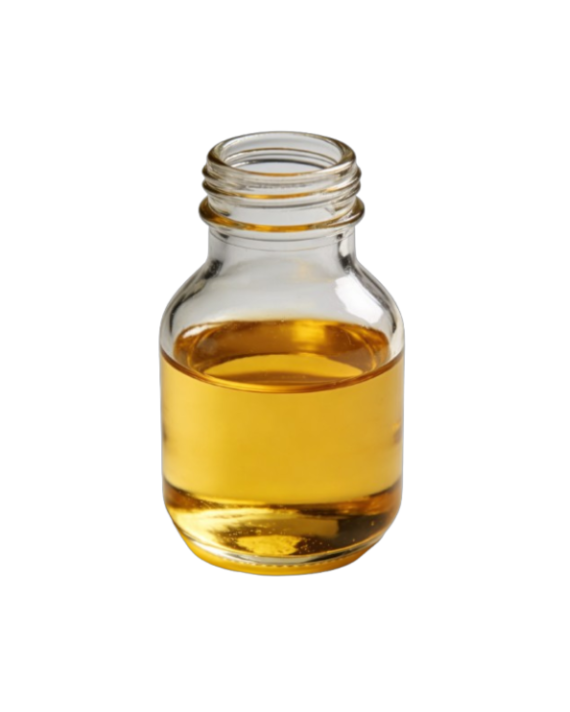
Base Oil Chemistry: What Makes a Hydraulic Oil Food Grade
The distinction between a conventional hydraulic fluid and a food grade equivalent begins at the molecular level, specifically with the base oil chemistry. Food grade hydraulic oils are formulated on one of three approved base stock categories, each offering a different balance of performance characteristics, temperature stability, and cost:
① White Mineral Oil (Highly Refined Paraffinic Mineral Oil) White mineral oil, also called technical white oil or food-grade mineral oil, is a highly refined, colorless, odorless, and tasteless petroleum-derived base stock that has been subjected to severe hydrotreatment and solvent refining to remove aromatic compounds, color bodies, and unsaturated hydrocarbons down to levels approved under 21 CFR § 172.878 and § 178.3620(b). White mineral oils form the most economical base for H1 hydraulic fluids and deliver adequate viscosity stability across moderate temperature ranges. Their principal limitation is a relatively narrow operating temperature window compared to synthetic alternatives: effective viscosity performance typically spans approximately −10°C to 90°C (14°F to 194°F) at standard ISO VG 32–100 viscosity grades.
② Polyalphaolefin (PAO) Synthetics: PAO base stocks are synthetic hydrocarbons produced by the oligomerization of alpha-olefin monomers, yielding a structurally uniform fluid with exceptional oxidative stability, very low pour points (down to −54°C / −65°F), and high viscosity indices (typically VI 140–170 compared to VI 95–110 for conventional mineral oils). PAO-based food grade hydraulic fluids are specified for extreme temperature applications — walk-in freezer conveyor hydraulics, outdoor food production equipment exposed to winter temperatures, and high-speed systems generating significant thermal load. The primary disadvantage of PAO synthetics is cost: they are typically 2.5–4× more expensive per litre than white mineral oil formulations.
③ Polyalkylene Glycol (PAG) Synthetics: PAG-based food grade hydraulic fluids offer outstanding lubricity and fire resistance relative to mineral oil systems, and have been successfully applied in food-grade hydraulic circuits requiring fire-resistant properties (e.g., near open-flame food processing equipment). However, PAG fluids require dedicated, thoroughly flushed hydraulic circuits due to their incompatibility with mineral oil residues and their tendency to absorb water, which limits their broad adoption compared to white mineral and PAO systems.
Performance Standards and Key Specifications
Not only must food-grade hydraulic oils satisfy the toxicological requirements of the H1 NSF classification, but they must also meet the full range of performance criteria for hydraulic fluids established by equipment manufacturers and international standards bodies. Therefore, specifying food-grade hydraulic oil requires an understanding of its position within the broader hydraulic fluid classification landscape.
ISO classification standard ISO 11158:2023 (Lubricants, Industrial Oils and Related Products — Mineral Oils — Specifications) defines the performance categories of hydraulic oils using the ISO-L-H series nomenclature. Food-grade hydraulic oils are most commonly formulated to meet ISO-L-HM or ISO-L-HV specifications: HM indicates mineral-oil-based anti-wear hydraulic fluids with oxidation and corrosion inhibitors; HV indicates the same, but with an improved viscosity index for use over a wide temperature range. The equivalent German standards, DIN 51524 Part 2 (HLP) and Part 3 (HVLP), are widely referenced in European food processing specifications.
Practical performance benchmarks that food-grade hydraulic oil formulations must clear, regardless of their H1 regulatory status, are provided by vane pump and piston pump approval data from major hydraulic component OEMs such as Bosch Rexroth, Parker Hannifin, and Eaton Vickers. Failure to meet minimum anti-wear performance thresholds will cause accelerated wear of pump internals, even if the fluid is perfectly food-safe by regulatory definition.
The following table summarizes the key performance classifications and certification requirements applicable to food grade hydraulic oil:
| NSF H1 Registration | NSF International | Incidental food contact safety; approved ingredient list (21 CFR § 178.3570) | Mandatory for food processing use |
| ISO 11158 (ISO-L-HM / HV) | ISO / TC 28 | Viscosity grades, antiwear performance, oxidation stability | Performance benchmark for hydraulic circuits |
| DIN 51524 Parts 2 & 3 (HLP / HVLP) | Deutsches Institut für Normung | Anti-wear, anti-corrosion, viscosity-temperature performance | European food plant specification |
| 21 CFR § 178.3570 | U.S. FDA | Approved formulation ingredients for H1 lubricants in the USA | Regulatory basis for H1 approval in North America |
| Codex Alimentarius CAC/RCP 1-1969 | FAO / WHO | General Principles of Food Hygiene (maintenance, lubricant management) | International food safety management framework |
| HACCP Prerequisite Programs (ISO 22000) | ISO / TC 34 | Lubricant management as part of prerequisite programs | Audit requirement in certified food facilities |
Applications: Where Food Grade Hydraulic Oil Is Required
The range of machinery in modern food and beverage manufacturing that relies on hydraulic systems is much broader than most people outside the industry realise. Hydraulic power is favoured over pneumatic alternatives in food processing for applications requiring a high force-to-weight ratio, precise motion control and smooth torque delivery — all of which are common requirements in heavy food processing machinery.
① Meat and Poultry Processing: Hydraulic systems power deboning presses, portion cutters, sausage filling machines, and hide pullers in red meat and poultry slaughter facilities. These environments are subject to aggressive cleaning protocols using hot water (up to 85°C) and caustic sanitizers, meaning hydraulic fluid systems must be maintained with appropriate seal compatibility, and the fluid itself must be H1-certified given the certainty of aerosol contamination risk during high-pressure wash-down.
② Baking and Confectionery: Industrial bread molding and forming equipment, chocolate enrobing machines, biscuit stamping presses, and dough extruders routinely incorporate hydraulic actuators. The proximity to flour, sugar, and finished product surfaces makes H1 certification a mandatory specification across virtually all major baked goods manufacturers.
③ Beverage Filling and Packaging Lines: Can seaming machines, bottle filling carousel drives, and labeling equipment in beverage plants use hydraulic systems — particularly in high-speed filling lines where pneumatic force is insufficient for consistent seam quality under high cycle rates. NSF H1 certification is typically written into OEM equipment specifications by manufacturers including Krones, KHS, and Tetra Pak.
④ Dairy Processing: Milk pasteurizer valve actuators, cheese presses, and cream separator drives in dairy plants operate in particularly demanding H1 environments given the regulatory sensitivity of dairy products to any form of contamination.
⑤ Vegetable and Fruit Processing: Hydraulic presses used in olive oil and juice extraction, vegetable canning line drives, and fruit sorting equipment are all potential contact-risk applications requiring H1-rated hydraulic fluid.
Food Grade vs. Conventional Hydraulic Oil: A Direct Comparison
Understanding the practical trade-offs between food grade and conventional hydraulic oil is essential for procurement engineers, maintenance managers, and HACCP coordinators making fluid selection decisions in food plant environments. The following table presents a structured side-by-side comparison across the most operationally relevant parameters:
| Base Oil | Refined mineral oil or PAO (no restriction) | White mineral oil, PAO, or PAG (21 CFR approved) |
| Additive Package | ZDDP, sulfurized EP, heavy metal inhibitors permitted | Only NSF White Book / 21 CFR § 178.3570 approved additives |
| NSF H1 Registration | Not required / not held | Mandatory for food plant use |
| Incidental Food Contact Safety | Not evaluated | Toxicologically reviewed; FDA/NSF approved |
| Antiwear Performance | High (ZDDP provides superior film strength) | Good; slightly lower EP film strength vs. ZDDP-based fluids |
| Stabilitas Oksidasi | Sangat Baik | Good to excellent (PAO-based H1 = excellent) |
| Typical Service Life | 4,000–8,000 hours (system-dependent) | 3,000–6,000 hours (white mineral); 6,000–10,000 (PAO) |
| Cost per Litre (ISO VG 46) | USD 2.50–5.00 | USD 6.00–18.00 (white mineral); USD 18–35 (PAO) |
| Regulatory Audit Compliance | Fails food plant HACCP lubricant audit | Passes NSF H1 / ISO 22000 prerequisite program audit |
| Color / Odor | Amber, mineral odor | Clear to slightly amber; essentially odorless |
Over the past decade, the performance gap between food-grade and conventional hydraulic oils has narrowed significantly as additive technology has advanced. Modern H1 hydraulic fluids from leading suppliers, such as Petro-Canada PURITY™ FG, Klüber Lubrication PARALIQ®, Fuchs Cassida® Fluid HF series, and Shell Cassida™ HF range, now meet or exceed the performance standards for viscosity index, wear protection, and thermal stability of standard industrial hydraulic fluids, all while remaining fully H1 compliant. The main difference that remains is cost, and in extreme pressure or temperature conditions, there is a slight reduction in the available additive chemistry compared to non-food-safe formulations.
Correct Viscosity Selection for Food Grade Hydraulic Applications
Viscosity is the most operationally critical parameter when specifying food-grade hydraulic oil. An incorrect viscosity grade causes more problems with the reliability of hydraulic systems than any other variable relating to the fluid, including contamination, because it directly affects pump efficiency, valve response, cylinder speed, and bearing film formation throughout the hydraulic circuit.
The ISO viscosity classification system (ISO 3448) defines oil grades for use in hydraulics by their kinematic viscosity at 40 °C in centistokes (cSt). The most commonly specified grades for food processing hydraulic systems are:
ISO VG 32: suitable for high-speed vane pump systems, indoor temperature-controlled environments, and hydraulic circuits with small-bore tubing and high flow velocity requirements. Viscosity at 40°C: 28.8–35.2 cSt.
ISO VG 46 is the most widely used grade in general food processing hydraulic circuits, balancing pump efficiency with film thickness adequacy for piston and gear pumps operating at standard industrial temperatures (20–50 °C ambient). Viscosity at 40°C: 41.4–50.6 cSt.
ISO VG 68 is specified for heavy-duty press applications, slow-speed high-force hydraulics, and systems operating at elevated ambient temperatures (above 35°C). Viscosity at 40°C: 61.2–74.8 cSt.
In food plant environments subject to wide seasonal temperature swings or refrigerated sections, a multigrade food grade hydraulic oil (e.g., ISO VG 46 HV grade with VI >140) should be specified to maintain adequate film thickness at low temperatures without excessive viscosity at operating temperature. Parker Hannifin’s Hydraulic Systems Design and Service Manual (2022 edition) provides minimum viscosity thresholds for pump types: axial piston pumps require a minimum operating viscosity of 10 cSt; vane pumps require 16 cSt minimum; gear pumps 10–13 cSt minimum, with all pump types having maximum cold-start viscosity limits of 860 cSt (vane) to 1,000 cSt (piston).
Regulatory Compliance and HACCP Integration
For food manufacturers operating under GFSI-benchmarked certification schemes — SQF, BRC Global Standard for Food Safety, FSSC 22000, or IFS Food — lubricant management, including hydraulic oil specification and change control, is a mandatory element of the facility’s Prerequisite Program (PRP). This means that selecting the correct food grade hydraulic oil is not merely a technical purchasing decision but a regulatory compliance obligation with direct audit consequences.
Under ISO 22000:2018 and its associated technical specification ISO/TS 22002-1, food manufacturers are required to maintain documented procedures for the selection, approval, and monitoring of food-contact lubricants. Specifically, audit requirements include:
① Maintaining an approved lubricant register identifying all H1-certified products in use, with corresponding NSF registration numbers verifiable on the NSF White Book database (nsfwhitebook.org).
② Documenting the basis for lubricant selection (NSF H1 classification, SDS review, OEM approval) for each application point.
③ Establishing and following a hydraulic oil change schedule based on condition monitoring data (particle count per ISO 4406, viscosity drift, acid number per ASTM D664) rather than calendar time alone.
④ Ensuring color-coded lubrication equipment — dedicated dispensing containers, grease guns, and filter carts marked for food grade use only — to prevent cross-contamination with non-food-safe lubricants.
⑤ Training maintenance personnel on the difference between H1 and H2 lubricant categories, and documenting this training in the HACCP personnel record system.
The NSF White Book provides real-time searchable access to all registered H1 lubricant products, allowing quality assurance teams to independently verify supplier claims before approving a new food grade hydraulic oil for use in a certified facility. A product that claims H1 status but does not appear in the NSF White Book should not be used in food-contact risk environments regardless of supplier assurances.
FAQ — Food Grade Hydraulic Oil
Q1: What does “food grade” mean for hydraulic oil?
“Food grade” hydraulic oil means the fluid has been formulated exclusively from ingredients approved under 21 CFR § 178.3570 (FDA) and registered as NSF H1 — the classification for lubricants acceptable for incidental contact with food. This does not mean the oil is safe to consume in quantity; it means that trace contamination at concentrations below NSF’s established incidental contact thresholds poses no recognized health risk.
Q2: What is the difference between H1 and H2 food grade lubricants?
H1 lubricants are registered for applications where incidental food contact is possible and must meet NSF/FDA ingredient approval requirements; H2 lubricants are for machine parts with no food contact risk and carry no NSF registration obligation. In a food processing plant, only H1-classified hydraulic oil should be used in equipment with any proximity to exposed food or food-contact surfaces.
Q3: Can food grade hydraulic oil replace conventional hydraulic oil in existing equipment?
Yes, in most cases food grade H1 hydraulic oil can be used as a drop-in replacement for conventional ISO-L-HM hydraulic oil of the same viscosity grade, provided the hydraulic circuit is thoroughly flushed during the transition to remove residual non-food-safe fluid. Compatibility of H1 fluid with existing seal materials (NBR, FKM, PTFE) should be confirmed via the fluid supplier’s seal compatibility data before changeover.
Q4: How often should food grade hydraulic oil be changed?
Change intervals for food grade hydraulic oil should be determined by oil condition monitoring rather than fixed time intervals, using particle count analysis (ISO 4406 cleanliness target ≤ ISO 17/15/12 for most food processing hydraulics), acid number testing (change indicated when AN exceeds twice the new oil baseline per ASTM D664), and viscosity measurement (change if viscosity drifts more than ±10% from new oil specification). Typical drain intervals for white mineral H1 fluids range from 2,000–4,000 operating hours; PAO-based H1 fluids typically extend to 6,000–8,000 hours under clean operating conditions.
Q5: Is NSF H1 certification the same worldwide?
NSF H1 is the most globally recognized food grade lubricant certification and is accepted as the compliance benchmark in the United States, European Union, Canada, Australia, Japan, and most other regulated markets. Some regional regulations — particularly the EU’s Regulation (EC) No. 1935/2004 on food contact materials — have their own frameworks, but NSF H1 registration is broadly accepted as satisfying incidental contact lubricant requirements under EU food safety law as well, particularly when used in conjunction with a documented HACCP prerequisite program.
Q6: What viscosity grade of food grade hydraulic oil should I use?
The correct viscosity grade depends on the hydraulic system’s pump type, operating temperature, and system pressure. ISO VG 46 is the most common general-purpose specification for food processing hydraulic systems operating between 20–60°C ambient; ISO VG 32 is preferred for high-speed vane pump systems in temperature-controlled environments; and ISO VG 68 suits heavy-duty presses or high-temperature applications. Always confirm the OEM’s minimum and maximum viscosity requirements for the installed pump — Parker Hannifin, Bosch Rexroth, and Eaton each publish pump-specific viscosity approval tables that take precedence over general recommendations.
Kesimpulan
Food-grade hydraulic oil plays a critical and irreplaceable role in ensuring the safe and compliant operation of food and beverage processing facilities worldwide. It is a technically sophisticated lubricant category, rather than a simple adaptation of conventional hydraulic fluid, and requires formulation using NSF-approved ingredients that comply with 21 CFR § 178.3570. It must also be registered with NSF International under the H1 classification and validated for performance against ISO 11158 and OEM hydraulic component approval criteria.
As food safety regulations tighten across global markets and GFSI-benchmarked certification audits increasingly scrutinise lubricant management programmes, specifying and documenting the correct H1 food-grade hydraulic oil is both a quality imperative and a commercial necessity. Procurement professionals, maintenance engineers and food safety managers who understand the regulatory basis, base oil options, viscosity selection criteria and HACCP integration requirements of food-grade hydraulic oil are well positioned to minimise contamination risk, pass third-party audits and extend hydraulic system service life — all at the same time.