


High-quality شحم ختم مقاوم للماء is a specialised lubricant and protective compound designed to resist water intrusion, reduce friction, protect compatible materials, and maintain reliable seals in wet or humid environments. The most suitable option depends on the application, seal material, operating temperature, and exposure conditions. ASTM International’s ASTM D1264 Standard Test Method for Determining the Water Washout Characteristics of Lubricating Greases provides a standardised way of evaluating grease retention under specified water exposure conditions. Engineering references such as An Overview of Grease Water Resistance explain why it is necessary to assess water resistance alongside corrosion protection and other performance properties.
Waterproof sealing grease is used in a variety of applications, including plumbing connections, rubber seals, bearings, outdoor equipment, automotive components, and industrial machinery. However, no single grease is ideal for every application. For example, a product that protects an O-ring in a low-speed fitting may be unsuitable for a high-speed bearing, a potable water system, or a seal made from an incompatible elastomer. Understanding the grease’s formulation, material compatibility, and service requirements is key to selecting one that will perform reliably rather than simply carrying a ‘waterproof’ label.
What Is Waterproof Sealing Grease?
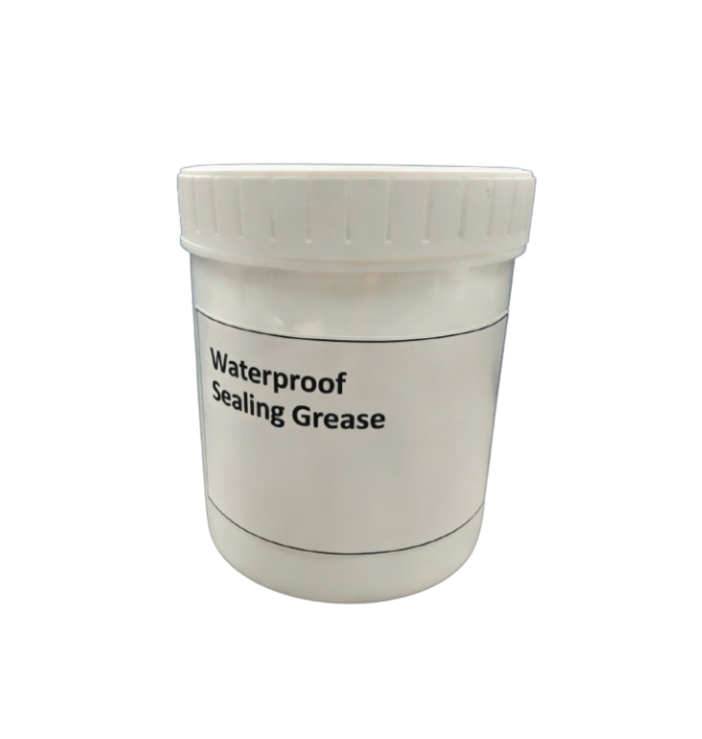
Waterproof sealing grease is a semi-solid lubricant or sealing agent designed to stay in place when exposed to moisture, splashing water, humidity, or, in suitable applications, repeated washing. Depending on its formulation, it can reduce friction between contacting surfaces, prevent rubber seals from drying out or sticking, limit corrosion of protected components, and reduce the likelihood of water passing through a properly designed sealing interface.
It is important to distinguish waterproof sealing grease from a structural sealant. While grease can lubricate a seal, fill small surface irregularities and support an existing sealing design, it cannot replace a correctly sized O-ring, gasket, thread sealant or mechanical seal. It should not be expected to repair cracked rubber, compensate for damaged threads, or stop leaks caused by excessive pressure or incorrect assembly.
The term also covers several different product families. Silicone grease is commonly used with compatible rubber and plastic seals, while certain synthetic, mineral oil, or other speciality greases may be preferred for bearings, metal components, or demanding industrial environments. Selection should be based on the product’s technical data sheet and the equipment manufacturer’s recommendations, not just on the word ‘waterproof’.
How Does Waterproof Sealing Grease Work?
Waterproof sealing grease works by combining surface lubrication, material compatibility, adhesion, and resistance to displacement by water. When applied as a thin, continuous film to a compatible sealing surface, it can reduce friction during assembly and movement, prevent sticking, and support sealing contact between components. On exposed metal parts, an appropriate formulation may also leave a protective layer that limits direct contact with moisture and contaminants.
The mechanism depends on the grease’s chemistry. Silicone-based products generally consist of silicone fluids that have been thickened to form a semi-solid material. They are valued for their water resistance and broad temperature capabilities, although exact performance varies by formulation. Other greases use mineral or synthetic base oils with different thickeners and additives to achieve specific properties such as load-carrying, corrosion inhibition, or mechanical stability. However, a grease’s resistance to water does not automatically mean that it will lubricate a heavily loaded bearing or remain stable at high speeds.
Water resistance itself has several dimensions. ‘Water washout’ describes how readily grease is removed from a component when exposed to water, while ‘water spray-off’ evaluates its resistance to displacement by a direct spray. These are related but distinct properties, and neither alone demonstrates every aspect of field performance. ASTM D1264 addresses washout from a bearing under prescribed laboratory conditions, while ASTM D4049 addresses the resistance of lubricating grease to water spray. ASTM notes that its laboratory washout test is not a direct substitute for evaluating real-world performance.
Main Types of Waterproof Sealing Grease
Different formulations are designed for different substrates and operating conditions. The table below is a practical starting point, not a substitute for a manufacturer’s compatibility chart.
| Grease type | Typical strengths | Common applications | Main selection concern |
| Silicone grease | Water resistance; often suitable for specified rubber and plastic components | O-rings, selected plumbing seals, electrical connector seals, valve components | Confirm compatibility with the exact elastomer and service environment |
| Lithium or lithium-complex grease | General-purpose lubrication and mechanical protection in suitable formulations | Selected bearings, chassis parts, metal-to-metal interfaces | Water resistance and temperature performance vary by product |
| Calcium sulfonate or calcium-based grease | Some formulations provide strong water resistance and corrosion protection | Marine equipment, wet industrial environments, selected bearings | Check load, temperature, speed, and equipment requirements |
| Synthetic grease | Can be engineered for broad temperature ranges or demanding operating conditions | Industrial machinery, specialized bearings, precision equipment | “Synthetic” does not guarantee waterproofing or seal compatibility |
| PTFE-containing specialty grease | Low-friction characteristics in formulations designed for particular applications | Selected valves, fittings, plastic mechanisms, precision assemblies | Verify intended use, substrate compatibility, and regulatory requirements |
Silicone grease is often associated with rubber seals because it can provide lubrication without relying on the same base-oil chemistry as conventional petroleum greases. Nevertheless, compatibility cannot be generalized to every rubber compound, and silicone products should not be used indiscriminately on every dynamic seal or mechanical assembly. For bearings and other loaded components, use a lubricant specifically rated for that equipment rather than assuming that a sealing grease can serve as a bearing grease.
Conventional and specialty lubricating greases should be compared using their complete specifications. The thickener type, base-oil viscosity, consistency, additive package, temperature range, and water-resistance test results all influence performance. Even products belonging to the same chemical family may differ significantly because formulation and manufacturing quality affect their behavior.
Where Is Waterproof Sealing Grease Used?
- Plumbing, faucets, and valve seals
In plumbing and water control equipment, a suitable waterproof sealing grease can help O-rings and other compatible seals slide into position without twisting, pinching, or tearing. It can also facilitate the smooth operation of moving valve components during assembly and maintenance. The grease must be approved for the specific equipment and, where applicable, for contact with drinking water; ordinary industrial grease is not necessarily safe for use in drinking water systems.
For threaded connections, first identify how the joint is designed to seal. Some connections seal at a washer, gasket, O-ring, or tapered thread, and grease alone cannot replace the specified sealing method. Applying excessive grease can interfere with assembly or contaminate water passages, so follow the manufacturer’s instructions for the fitting.
- Automotive and marine equipment
Vehicles, boats, and outdoor machinery can expose seals and fittings to rain, road spray, washdown water, and condensation. Suitable grease may protect selected seal interfaces, help prevent sticking, and reduce corrosion on compatible components. In marine settings, saltwater exposure makes corrosion resistance especially important, but saltwater protection must be verified from the product’s specifications rather than inferred from a general waterproof claim.
Automotive applications require particular care because components may operate at high temperatures, experience continuous movement, or use specialized elastomers. Brake-system seals, fuel-system components, suspension parts, electrical connectors, and wheel bearings each have distinct requirements. Only use grease specifically approved for the component; a general-purpose waterproof grease should never be substituted for a specified brake assembly lubricant or bearing grease.
- Industrial machinery and bearings
Industrial environments may involve cooling water, wash-down procedures, high humidity, dust, and repeated temperature changes. Using a grease with good water resistance can help to retain lubrication and reduce the risk of corrosion in suitable bearings and mechanisms. However, the selection must also account for factors such as rotational speed, load, operating temperature, relubrication interval, and the possibility of contamination.
For bearings exposed to water, procurement teams should request documented test results rather than relying on marketing terminology. ASTM D1264 measures water washout under prescribed conditions, while ASTM D4049 examines resistance to water spray. Together with corrosion-protection data and application-specific testing, these results provide a more meaningful basis for comparison.
- Electrical connectors and outdoor enclosures
Certain sealing greases are used on compatible connector seals, gaskets, and outdoor enclosure interfaces to support moisture protection. The grease does not make an improperly assembled connector waterproof, and it should not be applied to electrical contacts unless the manufacturer explicitly permits it. Excess grease may affect contact performance or interfere with a connection designed to operate without lubricant.
For outdoor equipment, check the required ingress-protection rating, seal design, operating temperature, and maintenance procedure. Grease is only one part of the protection system; correct cable glands, undamaged gaskets, proper fastening, and sound enclosure construction remain essential.
How to Choose High-Quality Waterproof Sealing Grease?
A high-quality product meets the actual demands of the application, not necessarily the one with the highest price or the broadest claims. Before purchasing, review the following criteria.
- Water-resistance performance: Determine whether the component experiences occasional splashes, direct water spray, continuous immersion, or washdown. Look for relevant test methods and results, such as water washout or spray-off, and remember that laboratory results do not guarantee performance in every service condition.
- Seal and material compatibility: Identify the exact material—such as EPDM, NBR, FKM, silicone rubber, or a specific plastic grade—before choosing a lubricant. A compatibility handbook such as The Seal Man’s O-Ring Handbook provides general guidance, but it also cautions that actual suitability should be confirmed through functional testing.
- Operating temperature: Confirm both the minimum and maximum service temperatures, including temperature peaks during cleaning or operation. A grease may remain physically present at one temperature but lose the viscosity, lubrication, or sealing performance required at another.
- Mechanical requirements: For bearings and moving assemblies, check base-oil viscosity, grease consistency, load capability, speed limitations, and relubrication guidance. A grease designed mainly for static seals may not provide the film strength or mechanical stability required by a rotating bearing.
- Corrosion protection: For steel parts, marine equipment, or components exposed to contaminated water, request corrosion-test information relevant to the intended environment. Water resistance and corrosion protection are related but separate performance characteristics.
- Safety and regulatory suitability: If the grease may contact drinking water, food-processing equipment, medical devices, or other regulated systems, confirm the relevant approval or certification for the exact product and use. Do not assume that a silicone-based or food-grade-labeled product is automatically suitable for every regulated application.
| Evaluation factor | What to check on the technical data sheet | Why it matters |
| Water resistance | Water washout, water spray-off, or other relevant test results | Indicates resistance to displacement under defined conditions |
| Base chemistry | Silicone, mineral oil, synthetic oil, or other formulation | Helps establish suitability for the application and materials |
| Seal compatibility | Explicit compatibility guidance for the exact elastomer or plastic | Reduces the risk of swelling, hardening, softening, or seal failure |
| Temperature range | Stated operating limits and application-specific restrictions | Helps preserve lubrication and seal function across temperature changes |
| Consistency and viscosity | NLGI grade where applicable and base-oil viscosity | Influences application, retention, and lubrication behavior |
| Corrosion protection | Relevant corrosion test data and intended environment | Important for metal components exposed to moisture or saltwater |
| Regulatory status | Exact approvals, certifications, and permitted uses | Helps meet potable-water, food-contact, or other compliance needs |
When comparing suppliers, ask for a current technical data sheet (TDS) and safety data sheet (SDS), plus test reports or material-compatibility documentation where necessary. For demanding industrial applications, a small controlled compatibility trial and a monitored service test may provide more useful evidence than a broad product claim.
How to Apply Waterproof Sealing Grease Correctly?
Even a suitable grease can underperform if the surface is dirty, the wrong amount is applied, or the assembly is incorrectly installed. A consistent procedure helps reduce leaks, seal damage, contamination, and unnecessary maintenance.
- Inspect the components. Check for cracks, cuts, corrosion, worn sealing surfaces, flattened O-rings, or damaged threads. Replace defective parts instead of attempting to compensate for damage with extra grease.
- Clean and dry the relevant surfaces. Remove old grease, dirt, abrasive particles, and incompatible residues using a cleaning method approved for the materials. Allow the surfaces to dry when required by the product instructions, particularly if trapped moisture could affect the assembly.
- Apply a controlled film. Use enough grease to coat the specified contact surfaces evenly, following the equipment manufacturer’s instructions. Excessive grease can attract contamination, interfere with assembly, or enter passages where it is not wanted.
- Install without twisting or pinching the seal. Position the O-ring, gasket, or other sealing component carefully and use the specified assembly procedure. Grease can reduce friction, but it cannot correct incorrect dimensions, misalignment, or excessive mechanical stress.
- Inspect and test the assembly. Check for leaks, abnormal resistance, or displacement of the seal. Where failure could cause injury, equipment damage, or environmental release, follow the required pressure, functional, or acceptance test rather than relying on a visual inspection alone.
- Establish a maintenance interval. The required inspection frequency depends on water exposure, movement, temperature, contamination, and the manufacturer’s recommendations. Reapply grease only when appropriate; adding more lubricant does not automatically improve sealing performance.
For production facilities and equipment manufacturers, documenting the selected grease, approved materials, application quantity, and inspection procedure can improve repeatability across assembly lines and service teams.
Common Mistakes When Selecting or Using Waterproof Sealing Grease
A common mistake is to assume that all waterproof greases are interchangeable. Although silicone grease, bearing grease, and speciality seal lubricants may share some resistance to water, they differ in terms of compatibility, mechanical properties, and intended use. Another common error is choosing a product solely because it feels thick or stays on a surface. However, apparent consistency is not a reliable indicator of water resistance, corrosion protection, or long-term stability.
A second issue is overlooking the sealing system itself. Grease cannot compensate for a damaged gasket, incorrect O-ring dimensions, an improperly tightened fitting, or a housing that does not meet the required ingress protection rating. Additionally, mixing different grease formulations can cause unpredictable changes in consistency or performance, so clean the assembly and follow the manufacturer’s instructions before changing products.
Finally, avoid treating a single laboratory result as proof of universal performance. ASTM D1264 and D4049 evaluate different forms of water exposure under defined conditions, and neither test alone covers every combination of temperature, load, seal material, and operating environment. The strongest selection process combines relevant standardised data with compatibility checks and application-specific validation.
Frequently Asked Questions About Waterproof Sealing Grease
- What is waterproof sealing grease used for?
Waterproof sealing grease lubricates compatible seals and components while helping resist moisture, water displacement, and—in suitable formulations—corrosion. Common applications include O-rings, plumbing fittings, outdoor equipment, and selected industrial components.
- Is silicone grease the best waterproof sealing grease?
Silicone grease is a good choice for many compatible rubber and plastic seals because of its water resistance and lubricating properties. It is not universally suitable, so confirm material compatibility and follow the equipment manufacturer’s specifications.
- Can waterproof sealing grease stop a water leak?
It may help an intact, correctly designed seal function as intended, but it cannot reliably repair a damaged gasket, cracked component, or incorrectly assembled connection. Identify the cause of the leak and replace or repair defective parts as necessary.
- Is waterproof sealing grease suitable for O-rings?
Yes, certain waterproof greases are designed for O-ring lubrication and assembly, but the formulation must be compatible with the O-ring material. Check the manufacturer’s compatibility data before using grease on EPDM, NBR, FKM, silicone rubber, or other elastomers.
- What is the difference between waterproof grease and regular grease?
Waterproof grease is formulated or selected to resist water exposure and displacement, while general-purpose grease may prioritize other lubrication requirements. The actual difference should be established through product specifications and relevant tests rather than the product name alone.
- How do you choose waterproof sealing grease for industrial applications?
Compare water-resistance data, seal compatibility, operating temperature, mechanical requirements, corrosion protection, and any regulatory approvals required for the application. Request the current technical data sheet and validate the product under representative operating conditions when reliability is critical.
الخلاصة
High-quality waterproof sealing grease protects compatible seals and components in environments where moisture, water spray, humidity, or washdown could compromise reliability. The most suitable formulation depends on the application in question: silicone-based grease may be appropriate for certain rubber seals, whereas bearings and demanding industrial equipment often require grease that has been engineered for their specific mechanical and environmental conditions.
To make a reliable purchasing decision, evaluate the following: water-resistance test data; material compatibility; temperature limits; corrosion protection; and documented approvals. Combine these checks with correct surface preparation, controlled application, and appropriate maintenance. This approach is more reliable than choosing a product based on a ‘waterproof’ label alone.